Show summary Hide summary
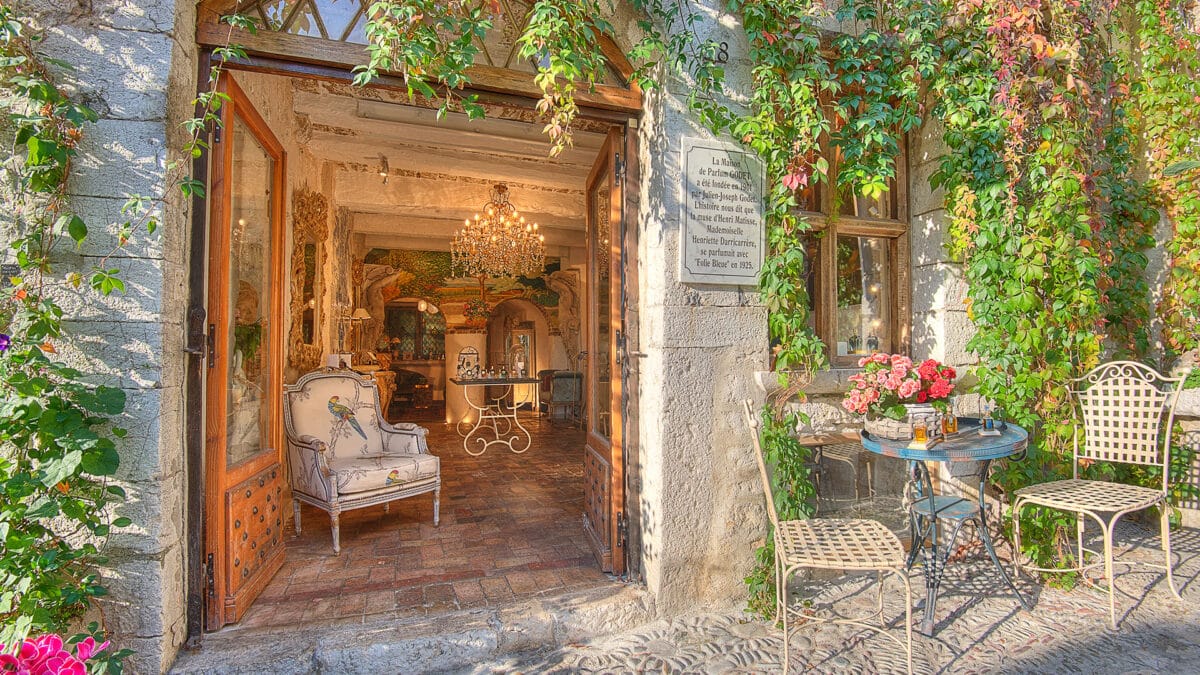
In Saint-Paul de Vence, along the Rue Grande, a pale stone façade often catches the eye of visitors: behind the glass door, the colorful bottles of Parfums Godet draw attention and invite you in. In this bright entrance hall, you discover a high perfumery house relaunched in 2017 but whose roots go back to 1901, when it was founded by Julien-Joseph Godet, then a 21-year-old chemist trained in Grasse.
How did this place, which at first looks like a simple boutique, become a near-essential stop during a stay in the South of France? By taking the time to step inside, you quickly realize that it is a genuine piece of local heritage, halfway between workshop, family home, and small living museum.
A perfumery house with over a century of history
The Godet house was founded in 1901, when Julien-Joseph Godet began creating perfumes using rare natural ingredients and an almost artisanal approach, far from the standardized productions emerging at the time in large industrial cities. Over the years, the house became part of the rise of perfumery along the French Riviera, and later moved closer to Saint-Paul de Vence, a hilltop village attracting a growing number of artists in the early 20th century.
The contemporary turning point came in 2016: the founder’s great-granddaughter, Sonia Godet, took over and settled the house in the heart of the village, opening the current workshop-boutique at 98 Rue Grande in 2017. In just over eight years, this new address has successfully brought an olfactory heritage back to life by reissuing historical formulas, while also creating new compositions inspired by Provence and Mediterranean light (to discover on the Parfums-godet.com website).
A deep connection with the artists of Saint-Paul
The history of the place is closely linked to that of the painters who contributed to the fame of Saint-Paul de Vence, adding a special depth to your visit. As early as 1908, Julien-Joseph Godet met Pierre Bonnard and created the fragrance “Fleurs de Reine” for the painter’s wife, using the demanding cold enfleurage technique to capture natural tuberose.
In the 1920s, ties with the artistic community strengthened: “Petite Fleur Bleue” was released in 1921, followed by “Folie bleue”, worn by Henriette Darricarrère, muse of Henri Matisse, in 1925. These creations, still produced according to their original formulas, tell part of the region’s cultural life at a time when Saint-Paul had just a few hundred inhabitants but was already attracting internationally renowned artists.
A discreet address on Rue Grande
The Parfums Godet house is located at 98 Rue Grande, the main street running north to south through Saint-Paul de Vence, lined with galleries, artisan workshops, and small boutiques. The shop occupies a stone building typical of the Nice hinterland, just a few dozen meters from the ramparts and the panoramic viewpoints overlooking the valley.
According to the tourist office, the Godet house welcomes visitors year-round, with opening hours generally ranging from 10:30 a.m. to 6 p.m. in winter, and up to 7:30 p.m. in summer, giving plenty of time to explore before or after a walk along the ramparts. The village itself has just over 3,500 inhabitants but receives several hundred thousand visitors each year, explaining why the entrance hall is regularly visited without ever feeling impersonal.
A reception hall designed like a scented lounge
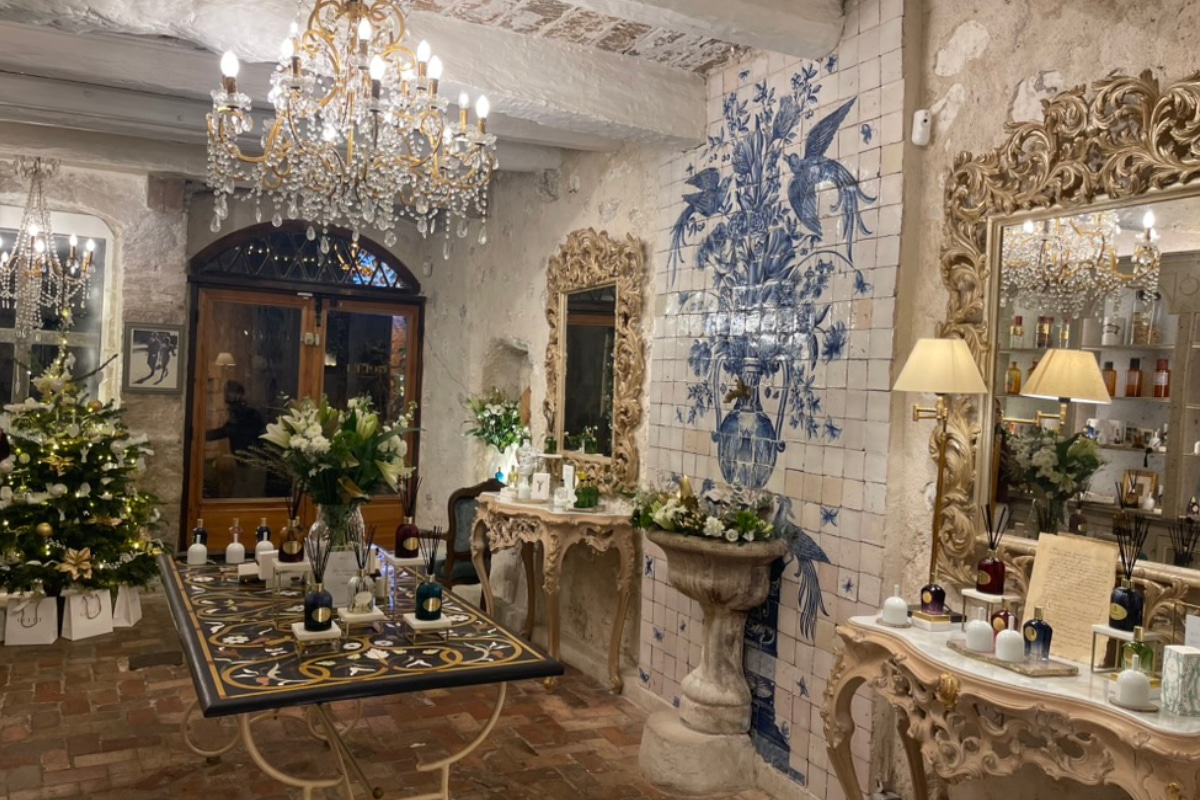
Once inside, you are immediately immersed in a reception hall that plays a central role: it is not just a sales area, but a true lounge where you are invited to take your time to smell, compare, and discuss. The house’s collections, such as “La Provence en senteurs”, “Florals”, or “Hesperides”, are displayed on wooden and glass shelves showcasing the hand-blown bottles, each crafted by a master glassmaker following the house’s approach.
The prices reflect the high-end positioning: an eau de parfum usually ranges from €69 to €230 depending on the size, while some gift sets reach €250 for the most sophisticated editions. This reception space, where you may easily spend twenty to thirty minutes, is also dotted with objects and vintage bottles recalling the brand’s heritage, giving the place an almost museum-like dimension.
A sensory journey guided by the team
What soon stands out as you stroll through the hall is the time the team devotes to each visitor to explain the history of the perfumes and guide fragrance selection. According to several reviews, the house maintains an average rating of around 4.8/5 based on more than 130 online reviews, a clear indicator of the quality of the welcome and advice provided on site.
On certain days, the house also hosts animations or events, such as new collection presentations or moments dedicated to the art of gifting, enriching the experience for passing travelers. It is therefore much more than simply looking at neatly arranged products: it is a calm, progressive discovery where you test scents on blotters, then on skin, before choosing at your own pace.
Craftsmanship, local production, and commitment
Behind the hall, the house’s identity is rooted in local production and full control of the entire process, from flower selection to juice maceration. According to the brand, each bottle is individually blown and shaped, and the distillation and maceration processes follow techniques inherited from the early 20th century, when industrial production had not yet overtaken the sector. Some fragrances highlight emblematic regional ingredients, such as tuberose or Provence rose, incorporated into formulas dense in natural materials.
The house also demonstrates concrete commitments regarding bottle recycling and shipping logistics, with a dedicated page on recycling and sustainable delivery on its official website. For those sensitive to these matters, it is worth noting that part of the clientele specifically seeks a more responsible alternative to mass-market perfumery, a point that resonates strongly with environmentally conscious travelers.
Practical tips to prepare your visit
To fully enjoy the entrance hall and boutique, it is best to plan your visit outside peak hours, generally between 11 a.m. and 4 p.m. during high season in the historic center of Saint-Paul. You can refer to the opening times indicated by the tourist office or by the Godet house, which mentions daily opening hours ranging from about 10:30 a.m. to 6 p.m. in winter and up to 7:30 p.m. in summer, with occasional slight adjustments on holidays or special events.
To help guide your discovery, here is a suggested sequence for your visit:
- Step into the hall and spend a few minutes observing the shelves before smelling each fragrance;
- Talk with a team member to share your preferences (floral, woody, citrus, oriental) and narrow the selection down to three or four scents;
- Test the fragrances on blotters, then on your skin, pausing a few minutes between each trial to let the heart and base notes unfold;
- Take photos of the hall and the bottles once you’ve made your choice, making sure not to disturb other visitors;
- Then enjoy a stroll through the village while letting the perfume evolve on your skin.
These steps will help you experience the visit as a true sensory journey rather than a simple shopping moment. If you wish, I can also integrate this stop into a tailor-made VTC sightseeing tour featuring other gems of the Nice region, allowing you to immerse yourself in the rich history of both the house and the village.To Discover: The Historic Parfums Godet House in Saint-Paul de Vence

